
Exposed: Dangerous Euthanasia Expansion Law Veiled as ‘Improvement’

New Zealanders, beware: Dangerous changes to assisted dying legislation that would release a euthanasia free-for-all and destroy any trace of safeguards have been hidden within a parliamentary bill.
“Voice For Life is sending out an alert. If this misleading bill is drawn and passed, it will impact every New Zealander’s end-of-life care, place pressure on the healthcare system, and harm the wider culture through the normalisation of its use,” Voice For Life president Lydia Posthuma says.
“This is the push for expansion we knew would come.”
The End of Life Choice Amendment Bill has been drafted and lodged into the member’s bill ballot by ACT MP Todd Stephenson and includes 25 damaging changes to the End of Life Choice Act that is currently in operation in New Zealand.
Most of the changes are recommended by the Ministry of Health following its three-year review of euthanasia; however, some have been introduced by Stephenson himself.
The combined result would fundamentally change the way euthanasia operates in New Zealand — and instead of making it safer, it would put far more people at risk.
To add fuel to the fire, Stephenson has made the factually incorrect claim that: “None of the existing safeguards are being weakened.”
The most significant and damaging recommendation lies in a seemingly simple removal of three key words from the existing Act: “6 month prognosis”.
Major change 1: Remove 6 month prognosis
In place of the current requirement that applicants must have 6 months or less to live, Stephenson’s bill seeks to unleash the eligibility criteria to open up euthanasia to anyone who has “been diagnosed with a condition that, either on its own or in combination with one or more other diagnosed conditions, is advanced, progressive, and expected to cause death.”
Waikato Hospital Head of Palliative Care specialist Lara Hoskins says this criteria will provide no definitive descriptor whatsoever and will result in horrific unintended consequences.
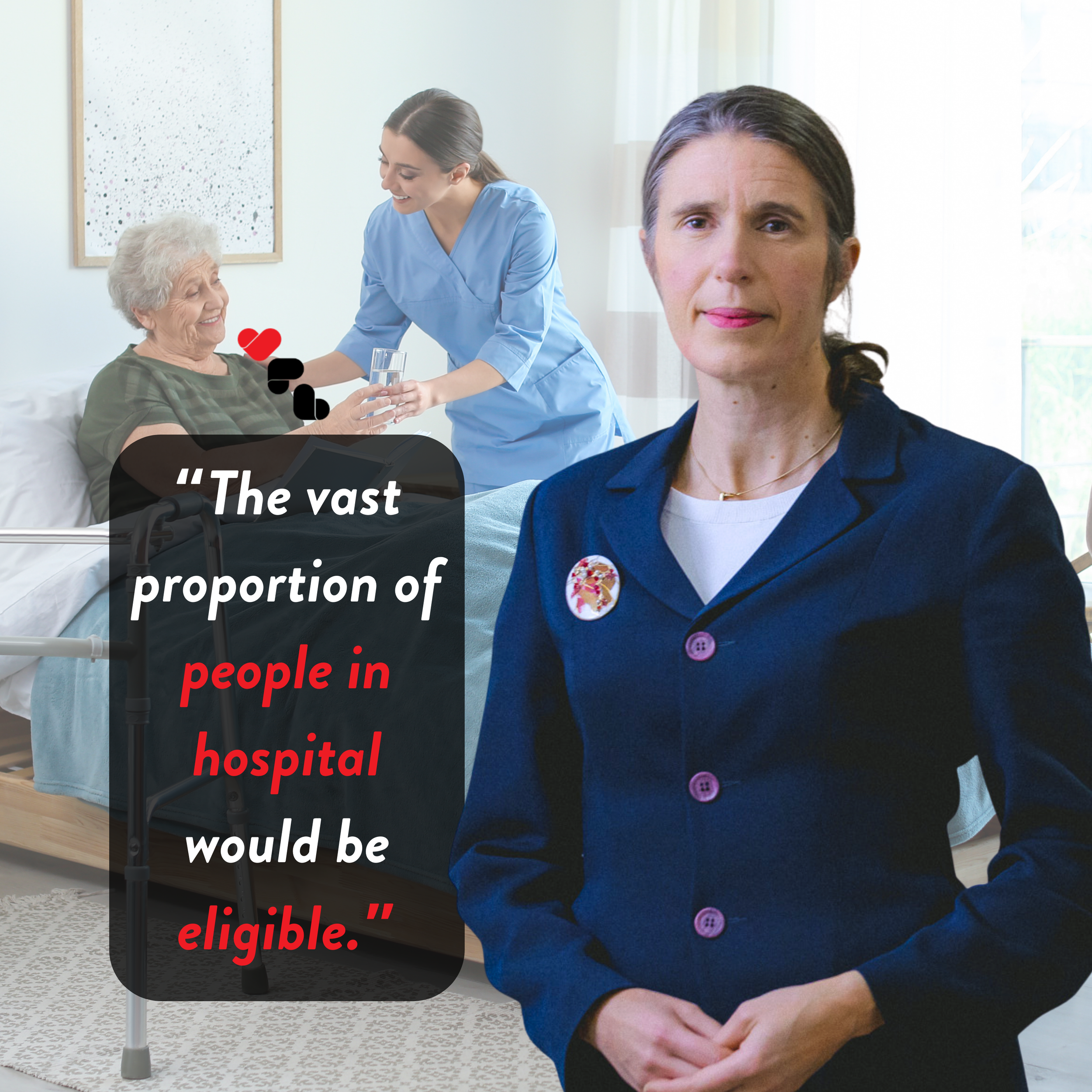
With more than 25 years of experience helping patients and their families through the final stages of life, Hoskins says this move would mean that one of the most vulnerable groups in the community, the elderly — would become the most eligible for euthanasia.
“The vast proportion of people in hospital would be eligible (for assisted dying) under this criteria,” Hoskins says. “The biggest group that would become eligible due to this criteria is the frail, elderly. Often they are the very ones isolated, lonely, and feeling they are a burden.”
What it will look like:
If passed, this eligibility criterion would make our law even weaker than that of Canada, which allowed for a 90-year-old woman living in an aged care facility in Toronto to receive euthanasia in 2020 despite loneliness being a primary reason for it.
Nancy Russell had been through a two-week isolation period during the Covid pandemic when residents were confined to their rooms. Faced with a second round of lockdowns, Russell applied for medically assisted dying.
She was refused once, but daughter Tory said she applied again during the winter as she had developed “more concrete medical health” issues. Canada’s law gave people who would face death in the “foreseeable future” access to euthanasia.
This time her application was approved.
“She just truly did not believe that she wanted to try another one of those two-week confinements in her room,” her daughter said after her death.
Major change 2: Force all healthcare facilities like Hospice and private care providers to carry out euthanasia on-site
Hospice NZ, aged-care facilities and retirement villages beware: If this bill passes you will have to host the delivery of euthanasia at your facility if it is requested.
Conscientious objection will be totally overridden.
Stephenson’s bill stipulates that all care facilities will be required to provide on-site access to euthanasia if their residents or patients request it. Care facilities include public hospitals, private hospitals, hospices, residential aged-care facilities, disability residential care facilities, rest homes and other facilities.
Currently, Hospice NZ provides palliative care to patients and their families regardless of their choice in relation to euthanasia. But 30 out of 31 facilities do not allow it to take place within their facilities. The current Act protects their right as an organisation to exercise freedom of conscience when it comes to conducting it on-site.
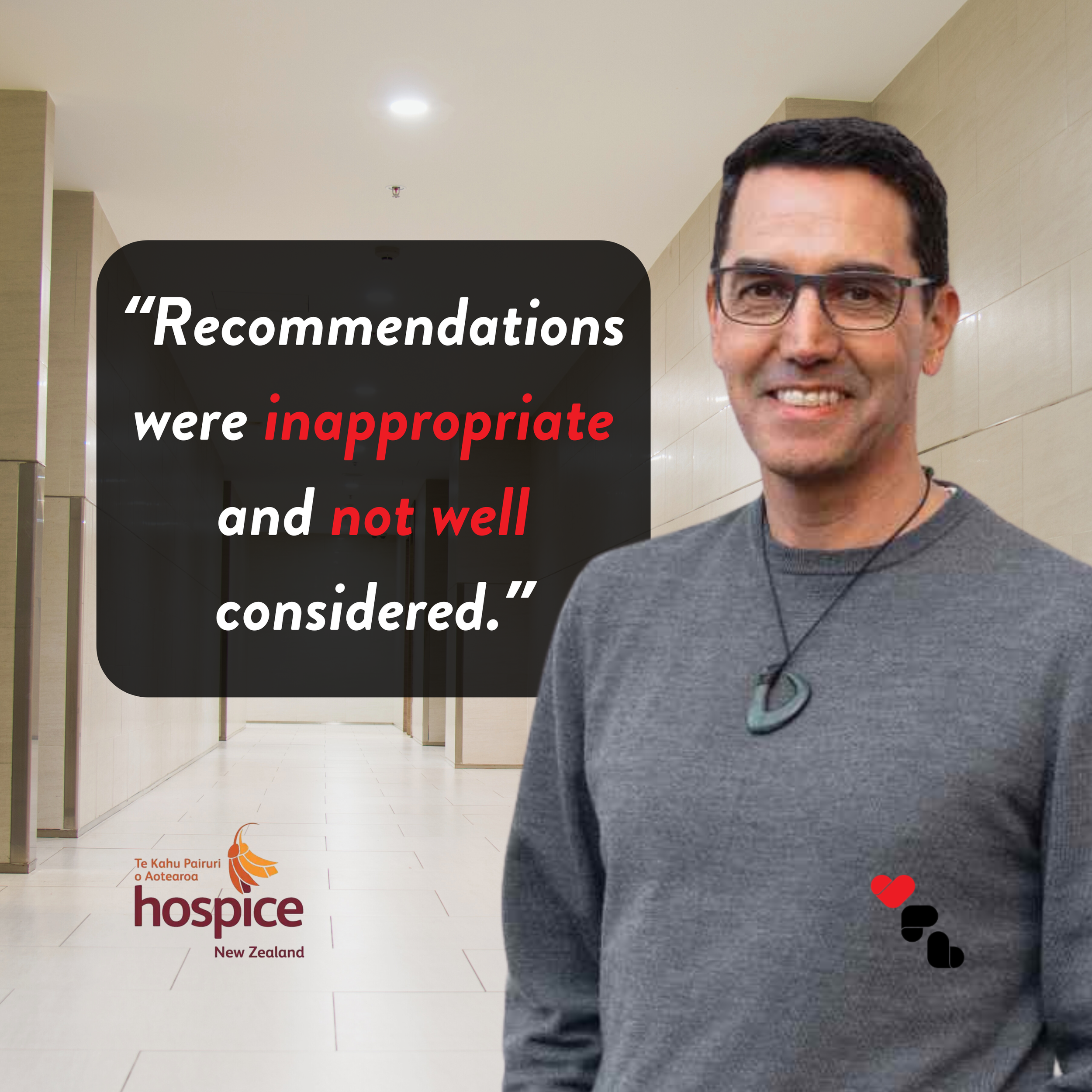
“Hospice NZ is a firm supporter of conscientious objection both by individuals and organisations. It is after all a legal right of all New Zealanders as enshrined in the NZBORA,” says Hospice NZ’s chief executive Wayne Naylor.
“This is also a foundational aspect of the EOLC Act, and the Ministry of Health’s recommendations in relation to conscientious objection are flawed,” Naylor says.
“Many of the Ministry of Health’s recommendations in their review were inappropriate and not well considered and should not, therefore, be included in any amendments to the Act.”
Hospice NZ does NOT support the removal of conscientious objection rights.
What it will look like:
Canada has become a glaring example of what happens when these objection rights begin to erode.
In 2020, the Government of British Columbia announced it would stop funding for the Irene Thomas Hospice (overseen by the Delta Hospice Society) due to the board’s refusal to comply with euthanasia.
Not only did the government terminate its $1.5 million funding to the hospice, it also evicted the hospice society, fired all the staff, transferred its assets and began conducting euthanasia in the facility.
Major change 3: Doctors can suggest euthanasia to patients
Currently healthcare professionals cannot initiate or offer euthanasia to patients, rather the patient must initiate an enquiry.
This patient-led process somewhat protects those engaged in difficult end-of-life care conversations with their healthcare providers, reducing the risk of coercion or the active directing of people towards euthanasia.
Stephenson’s bill would allow for practitioners to raise euthanasia as a potential ‘treatment’ pathway, claiming this will give patients the ability to make an ‘informed choice’ due to their having access to all possible options.
What it will look like:
Stephenson asserts the current legislation breaches Consumer Rights and creates a taboo around euthanasia, leaving some patients unaware that it is available to them.
But this restriction is currently what holds back what is being seen in Canada, where war veterans are being offered euthanasia as a treatment option for PTSD.
Several people with disabilities who were struggling to get funding for equipment to help them have better quality of life were offered the “treatment option” at the moment of their vulnerability, including former paralympic athlete Christine Gauthier who testified before the Canadian Parliament in 2024.
And a hospital in Vancouver released an apology in 2023 to patient Kathrin Mentler after she was offered euthanasia while seeking psychiatric help for her suicidal thoughts.
Euthanasia is not healthcare and should not be offered as such. It does not seek to treat the suffering of the patient. Instead it simply ends the life of the suffering patient.
Major change 4: Remove the need for consent on the day of death
It will no longer be a requirement for a patient to give consent on the day of their euthanasia, according to another proposed change in Stephenson’s bill.
If a patient has been granted access to euthanasia, signed a waiver, and then lost their “capacity” to give consent on the day, the bill is proposing that doctors should still be permitted to administer the lethal dose.
Called a “waiver-of-final-consent,” proponents claim that it will extend autonomy for those at risk of losing mental capacity.
But in practice it will mean that the most important and essential requirement for truly free and informed consent - having functioning mental capacity - will be completely disregarded.
Mental capacity fluctuates, and patients change their minds from day to day, often without anyone else being aware.
To create legislation that fails to consider this will have a disastrous impact.
Major change 5: Reinforce and intentionally integrate euthanasia as ‘normal’ healthcare
Do you want to see euthanasia advertised on your TV, on the library noticeboard, and at the doctor’s office?
The bill is pushing for the advertising of euthanasia throughout health and community settings using a minimum of posters, pamphlets, and printed material.
It is claimed that this is about educating people about their “health options”, and Health New Zealand investing funding to uphold consumer rights to informed consent.
In practice though, it will actually mean that more vulnerable Kiwis will be exposed to material promoting assisted suicide and euthanasia regardless of whether they are terminally ill or not.
This point becomes even more worrisome when you consider that people experiencing mental health issues are also more likely to visit healthcare facilities.
Stephenson acknowledges that the current law is achieving its intent to ensure people are protected from this very pressure, but he only views that as a limitation which he claims is creating an “inequitable barrier to access”.
“Calling it healthcare, and advertising lethal injections is another step towards normalising euthanasia and assisted suicide,” Posthuma says.
“We want money spent on real healthcare and palliative care, not early death.”
WHAT ARE THE CHANCES THIS BILL WILL BE DRAWN?
Any changes to the End of Life Choice Act must be made through legislation in Parliament.
As a member’s bill, Todd Stephenson’s End of Life Choice Act Amendment Bill has been submitted into the ballot, alongside other bills awaiting selection. To progress, it must normally be randomly drawn from the ballot.
If drawn, the bill is placed on the Order Paper — a limited list of bills Parliament works through — and, once it reaches the top, it is introduced to the House. It must then pass through the full parliamentary process, including first and second readings and select committee scrutiny.
However, changes to Parliament’s rules introduced around the last election allow a private member’s bill to bypass the ballot entirely if it gains the support of at least 61 MPs. This would enable the bill to be introduced directly to Parliament, requiring broad cross-party backing.
Former National Party MP and Family First spokesman Simon O’Connor says this makes it critical for supporters of life to contact their MPs and let them know that expansion of euthanasia laws is not wanted, and freedom of conscience must not be undermined.
“While the likes of the National Party will not want to be discussing this controversial topic and will do all they can to avoid it, if the bill is drawn from the ballot, I think there would be enough support across the Parliament for it to pass,” O’Connor says.
“Sadly, Parliament has become increasingly liberal, with few genuine conservatives left — and even fewer prepared to take a stand on these issues.”
Now is the time to raise your voice in opposition.
Voice For Life is calling on New Zealanders to contact their local MPs and make it clear they do not support any expansion of euthanasia laws or the erosion of freedom of conscience.
HERE IS HOW - WRITE TO YOUR MP
O’Connor has provided key steps and recommendations to create an impactful email or letter to your local MP.
Identify who your MP is: You will have an electorate MP, but at times there may also be a List MP who is resident or active in the area.
Find their email address or electorate office address online. Most of the time the email address will follow this pattern: firstname.lastname@parliament.govt.nz
When emailing/writing start with their specific name rather than “Dear MP”.
Mention that you are their constituent and preferably name the electorate.
Note that what is being written about is important to you as a key influence on your vote.
Write firmly, but politely.
Get to the key points quickly, in fact, in the first sentence or two and then begin elaborating.
The fewer paragraphs the better. MPs are busy, so if an email/letter comes through looking exceptionally long the MP will likely switch off
If you are willing, do say you would welcome the chance to come and meet the MP.
End by stressing this is very important to you as a voter.