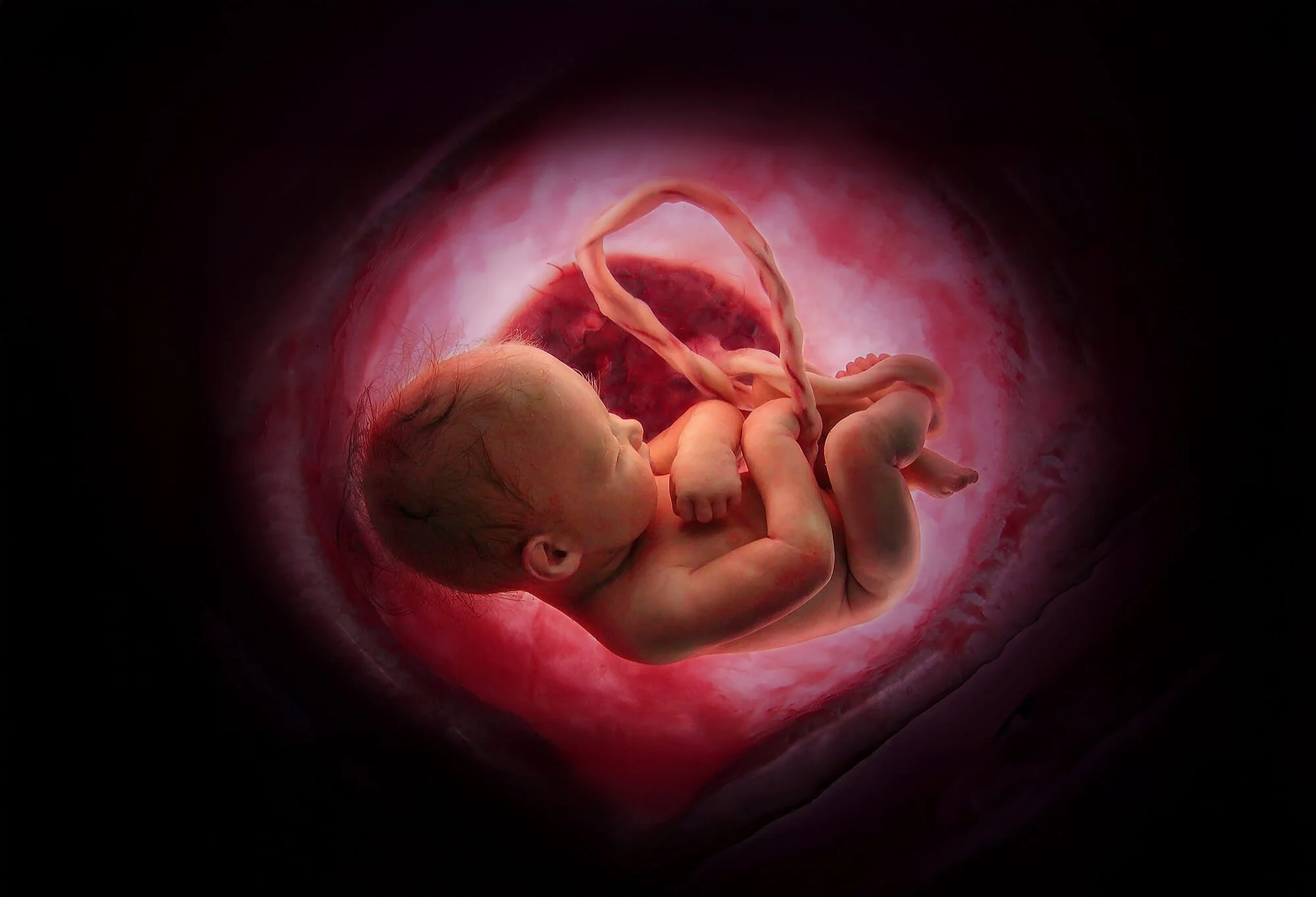
Prenatal development
The week by week development of a little human
“The start of pregnancy is normally marked by the first day of the woman’s last menstrual period (LMP). This is called the gestational or menstrual age. It is about two weeks ahead of when conception actually occurs.”
“Fertilisation. This is when a sperm enters an egg. All going well, the result is a new human being, at this stage referred to as a zygote. The zygote now begins a journey along the fallopian tube towards the uterus.”
“Implantation. At this point, the developmental stage known as a blastocyst burrows into the uterine lining. ”
“ Embryo. At this stage a circulatory system is developing, as well as the foundations for the skin, bones, ligaments and kidneys.”
“The heart is beating. The neural tube from which the brain and spinal cord develop has now closed. Small buds have formed on the trunk; these will grow into the arms and legs.”
“Further development of the brain and face. The buds on the trunk are now resembling paddles.”
“The lower buds become more pronounced, developing into the feet. Little fingers are recognisable. Facial features such as nose, eyes, lips and ears are forming.”
“Toes have formed. The head is much more pronounced. At this stage, the preborn child, known as a foetus, measures 16 – 18 mm.
9 weeks LMP”
“The foetus can now bend their elbows and knees. The fingers and toes have lost their webbing.
10 weeks LMP”
“External genitalia are developing. The liver is making blood cells. Tooth buds are emerging. The foetus is now practicing breathing motions.
11 weeks LMP”
“ The preborn child now has a very human looking facial profile and makes random movements. Fingernails are growing. The intestines have shifted into the abdominal cavity.
12 weeks LMP”
“All major organs are present, although not yet fully developed enough for survival outside the womb.”
“Toenails are developing.”
“Some women can feel their preborn child moving. At this point the average weight of a preborn child is 117gm, and their average length is 16cm. ”
“The lungs are developing quickly, although at this stage they are not yet filled with alveoli, the sacs in the lungs that allow gas exchange. ”
“Ears are now more pronounced and are folding out from the head. The preborn child begins to hear for the first time.”
“Facial features are now clearly recognisable.”
“There is now fine hair covering the body, known as lanugo. On average the preborn child is now 27cm long and weighs 400 gm. From this point, development is more about fine-tuning the organs and increasing in size and weight.”
“Rapid Eye Movement, an indication of dreaming, has been noticed at this stage. ”
“The preborn child is able to respond to sounds outside of their mother’s body. ”
“From this stage onwards, the preborn child is storing fat and further developing muscle tissue. ”
“The pregnancy is considered full term and the child will soon be born.”