
“Life Is Hard, But Not Impossible”: 26 Years of Chronic Pain — and a Different View of Assisted Dying
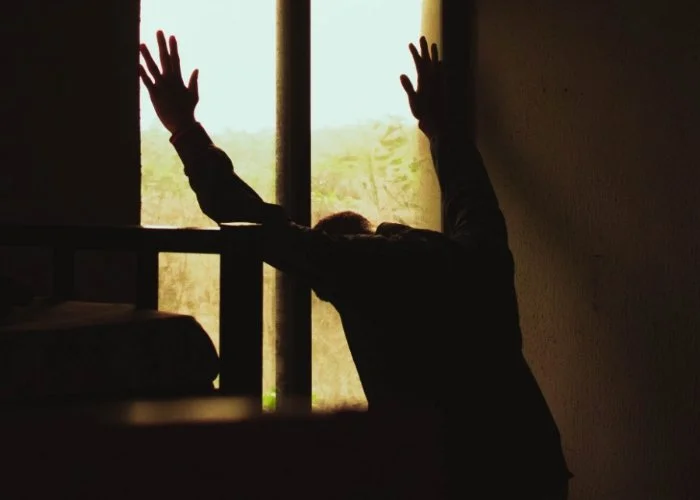
For more than 26 years, Sjirk has lived with pain that most people will never experience.
In August 2000, the New Zealand electrician was working three metres above the ground on a pole house when his stepladder broke beneath him. He fell to the level below and then another three metres into a drainage ditch.
The seriousness of the injury became apparent almost immediately. At the hospital, Sjirk remembers having to climb onto the X-ray table himself because it was lunchtime and a student was working on her own.
“When the first image was taken, I heard the girl behind the screen say, ‘Ooooh, don’t move.’”
Suddenly, he recalls, the room began filling with doctors and nurses.“I knew then it was serious.”
The fall fractured his T12 vertebra and left him with a chronic, debilitating pain condition that would reshape almost every part of his life.
“The pain was out of this world,” he says.
He knows severe pain… He has suffered kidney stones five times, but describes those experiences as “a picnic in the park” compared with the pain that followed his accident.
Over the following 26 years, his treatment would include morphine, codeine, pregabalin, venlafaxine, amitriptyline, paracetamol and, more recently, medicinal cannabis. Through ACC he attended three pain clinics and tried physiotherapy, breathing techniques and acupuncture.
Surgery was considered. But he says the assessment was confronting: there was a substantial risk that he could end up in a wheelchair while still experiencing the same pain. So he continued living with it.
There were consequences.
The man who had cycled the Lake Taupō Challenge three times and played squash and cricket with his children found those parts of his life disappearing. Work became increasingly difficult. Travel plans he and his wife had imagined for retirement never eventuated. And there have been nights when the suffering overwhelmed him.
“I have certainly had these moments,” he says.
He remembers being on his knees in his lounge, in severe pain despite his medication, praying: “Dear Lord, is this not enough? Please take me!”
His story therefore isn't one of someone observing unbearable suffering from a distance. He knows what it is to desperately want suffering to end.
But more than a quarter of a century after the accident, he is still here — and his conclusion about suffering, death and assisted dying is strikingly different from the one increasingly heard in New Zealand's euthanasia debate.
A different response to suffering
Stuff recently told the story of Rick Weldon, a terminally ill New Zealander who wanted an assisted death but was found ineligible under the End of Life Choice Act because doctors could not determine that he had less than six months to live.
Weldon subsequently chose to stop eating and drinking in an attempt to bring about his death — an experience his family is now drawing on to advocate for changes to New Zealand's assisted-dying law.
But where Weldon's experience has become part of an argument for widening access to assisted dying, Sjirk believes his own experience points in another direction.
Sjirk can understand something of Weldon's desperation. “I know what it is like to be desperate,” he says.
“The difference is that I am still alive and still have a purpose here on earth.”
For him, that conviction is inseparable from his Christian faith. After initially wrestling with “why me?”, he says he gradually came to understand his circumstances through that faith.
“After the initial ‘why me’ syndrome, I have come to the realisation that this is what the Lord had in mind, so I rest in that.”
Every morning, he deliberately chooses to approach another day positively and asks the Holy Spirit to help him do that.
His faith does not make the pain disappear. Nor does it mean he pretends suffering is easy.
“Life is hard,” he says, “but not impossible.”
Should one tragic case determine where the safeguards are drawn?
Rick Weldon's story raises difficult and legitimate questions about suffering and end-of-life care. But there is another question New Zealand must ask.
When an exceptionally difficult case occurs outside the eligibility criteria of the End of Life Choice Act, is the answer necessarily to expand those criteria?
Removing or substantially extending one of those criteria doesn't merely provide another option to one person whose circumstances have captured public attention. It changes the boundary for every New Zealander who comes afterwards.
Voice For Life believes that should make New Zealand extremely cautious about arguments for expansion based primarily on individual cases.
The people around us matter
One of the things that has sustained Sjirk has been turning his attention away from himself.
“An outward focus has really helped me. To focus on somebody else means you temporarily forget about yourself.”
He also stresses that chronic illness never affects only the person experiencing it.
“Don't forget that the family also suffers, especially my wife. She has the strength of a giant.”
Today he and his wife live with their daughter, son-in-law and five grandchildren. Rather than seeing himself simply as someone whose former life has been taken away, he talks about what remains: family, church, relationships, faith and purpose.
“We are blessed.”
That distinction matters in the assisted-dying debate.
What happens when suffering and vulnerability meet?
Assisted dying is frequently presented as an issue of individual autonomy.
But serious illness rarely occurs in isolation. People can be frightened, dependent on others, financially vulnerable, lonely or worried about becoming a burden. They may have lost abilities that previously gave their lives meaning. And sometimes they may desperately wish they were dead.
Sjirk understands at least some of that territory. Yet the night on which he knelt in his lounge asking God to take him was not the end of his story. Had his worst moment determined the value of all the years that followed, an enormous part of his life would never have happened.
That is one of the difficulties with turning suffering into an argument for expanding access to assisted death. We cannot know what remains in another person's life.
When suffering doesn't end the value of life
Stories of extreme suffering deserve to be heard. They show why people can reach a point where death appears preferable to continuing to live. But they are not the only stories.
There are also New Zealanders living with severe, persistent and sometimes overwhelming suffering who have reached a different conclusion. People who have lost careers, independence, physical abilities and dreams they once expected to fulfil. People who have had moments when they wished their suffering would end. And who nevertheless believe their lives continue to have meaning and value.
For Sjirk, the answer lies ultimately in his Christian understanding of life and death.
He frequently returns to the words of Philippians 4:4:“Rejoice in the Lord always.”
He recognises that someone who does not share his faith may see suffering very differently.
“I know if you do not have this assurance, that makes life really, really hard.”
But after 26 years of living with the consequences of one devastating fall, his message is remarkably simple. Suffering can change a life. It can take away things that once seemed fundamental to who we were. It can produce moments of despair. But suffering does not necessarily mean that life has lost its value.
For him, 26 years later, it hasn't.
“Life is hard but not impossible.”
What kind of society do we want to become?
There will always be extraordinarily difficult cases. There will always be people whose suffering confronts medicine with its limitations.
Compassion requires us to take those experiences seriously. But compassion does not automatically tell us what the law should permit.
If every exceptionally difficult case becomes an argument for expanding assisted dying, safeguards can gradually become viewed not as protections but as obstacles preventing someone from obtaining what they want. That is a profound shift.
The six-month prognosis requirement becomes an unfair barrier. Conscience protections become barriers. Restrictions around where assisted dying occurs become barriers.
Eventually, the very safeguards established because assisted dying involves the intentional ending of human life risk being portrayed as problems requiring removal.
That is not a world we should desire to live in.
Sjirk has had his last name withheld to protect his privacy.