
A Better Choice: Why Open Adoption Must Be Part of New Zealand’s Pregnancy Conversation
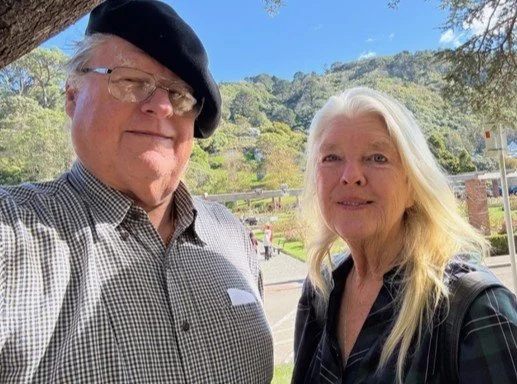
For Ellen and Nick Brumder, adoption is not a theory, a policy position, or an abstract ethical debate. It is woven through their lives across continents, careers, churches, families, and decades of experience walking alongside women facing unplanned pregnancies.
“We’ve lived in the middle of adoption stories for most of our adult lives,” Ellen says. “Not as saviours; just as people who have seen, again and again, that there is a better option than abortion when a woman feels she can’t parent.”
Originally from Texas, Ellen and Nick have lived in Waihi for the past 14 years. They run Berry Lane Organic Blueberries, Nick works as a blacksmith, and together they are parents to five adult children aged between 29 and 43, with eight grandchildren. Their home, they say, has always been full of stories… many of them about adoption.
But in recent years, the Brumders have found themselves increasingly concerned about how difficult it has become for women in New Zealand to even hear about open adoption as an option. And so they went on to establish Open Adoption: The Gift of Love — an organisation advocating for reform in New Zealand’s adoption system and promoting open adoption as a positive, life-affirming option.
“The tragedy,” Ellen says, “is not just that abortion happens. It’s that so many women never get told they have a third choice.”
Where Adoption and Abortion Intersect
For Ellen and Nick, the link between abortion and adoption is obvious yet increasingly ignored.
“Abortion and adoption intersect at the point of crisis,” Ellen says. “A woman is pregnant, doesn’t feel able to parent, and is told there are only two options: terminate or keep the baby. But that’s not true. There is a third option, open adoption, and it’s being systematically sidelined.”
Nick puts it more bluntly. “Give her the choice not to kill, and not to keep. That’s all we’re asking.”
They emphasise that adoption is not used to influence decisions through pressure or to impose guilt. It is about restoring genuine choice, especially in a legal environment where abortion up to birth is permitted, but adoption pathways are tightly constrained.
“In New Zealand,” Ellen says, “we’ve made abortion easier and easier, including late-term abortion, while making adoption harder and harder. That imbalance matters.”
What Changed in New Zealand?
Ellen remembers a very different adoption landscape.
“Fourteen years ago, when we arrived in this country, there were still remnants of the old system — private maternity homes, Salvation Army centres, places like Bethany,” she says. “Many families adopted through those centres. People adopted two, three children. It wasn’t unusual.”
But over time, those services closed, often for financial reasons, and Oranga Tamariki became the sole gatekeeper of adoption in New Zealand.
“That’s when the real chill came on,” Ellen says.
She describes encounters with social workers who were openly hostile to adoption.
“They were trying to convince me that adoption itself was traumatic,” she says. “That it caused an irreversible ‘primal wound’ if a baby was separated from its mother at birth.”
Ellen points to the book The Primal Wound (1985), which she says has had an outsized influence on adoption policy despite lacking robust scientific grounding.
“There’s no solid science behind the idea that adoption is inherently traumatic,” she says. “Yet it’s treated like gospel.”
The result, she believes, is a conflation of closed adoption practices of the past with modern open adoption, which are fundamentally different.
“Open adoption has been happening in New Zealand for 35 years,” Ellen says. “But it keeps getting lumped together with closed adoption as if they’re the same thing. They’re not.”
The 12-Day Waiting Period: A Question Without Evidence
One of Ellen’s concerns is the mandatory 12-day waiting period after birth before an adoption can be finalised in New Zealand.
“What is the science behind that?” she asks. “Why 12 days?”
She contrasts this with the United States, where in many states, adoptive parents can be present at birth.
“In America, the new parents can catch the baby,” she says. “That bond starts immediately.”
In New Zealand, she argues, the system is built around the assumption that birth mothers will regret adoption.
“The director of adoption has said, ‘People change their minds after the baby is born,’” Ellen says. “But where is the evidence that delaying bonding improves outcomes?”
To Ellen, the waiting period reflects a deeper distrust of adoption as a legitimate, life-affirming choice.
“It feels like the system is designed to discourage adoption, not support it.”
When Women Aren’t Even Told Adoption Exists
Perhaps most troubling to the Brumders are the stories of women who were never told about open adoption at all.
Ellen recalls a woman who was 32 weeks pregnant, seeking a late-term abortion.
“She hadn’t even been presented with the option of open adoption,” Ellen says. “Not once.”
Unless a woman independently seeks out pregnancy support centres, such as those in Tauranga or elsewhere, adoption may never be discussed.
“They’re not presenting it unless she goes to a pregnancy support organisation,” Ellen says. “That’s not informed consent.”
Nick adds, “Thousands of abortions happen every year in New Zealand. How many of those women were told, clearly and honestly, that open adoption was an option?”
Why Open Adoption Works
For Ellen and Nick, open adoption is not just ethically preferable, it is scientifically supported.
“There is longitudinal research that supports open adoption,” Ellen says. “It’s not ideology. It’s evidence.”
She references research showing high levels of satisfaction and gratitude across the adoption triad — birth parents, adoptive parents, and adopted children.
“The gratitude rarely fails,” she says. “That’s what the research shows.”
Open adoption, she explains, allows birth mothers to remain part of their child’s life.
“You don’t lose track of your baby,” she says. “You’re part of the extended family.”
While open adoption agreements are not legally enforceable in New Zealand, adoptive parents hold full legal rights. Ellen says the relational commitment is what matters.
“In practice, openness works because people choose it,” she says.
A Child Protection Issue — Not Just a Moral One
Ellen believes open adoption has enormous potential to address New Zealand’s child protection crisis.
“Every five weeks in New Zealand, a baby or child is killed,” she says quietly. “That should stop us in our tracks.”
High rates of alcohol and drug abuse, family violence, and mental illness mean many parents know they cannot safely parent, yet fear losing all connection with their child through state care.
“Open adoption is a way to be a mum without being a solo mum, and without your child entering the foster system,” Ellen says.
She believes it could prevent abuse by offering a dignified alternative.
“It’s a perfect solution when parents are aware they can’t provide a safe home, but don’t want to disappear from their child’s life.”
A Falling Birth Rate and a Missed Opportunity
Ellen also connects abortion and adoption to New Zealand’s declining birth rate.
“Our fertility rate is about 1.56,” she says. “That’s below replacement.”
She notes the broader social implications: an ageing population, fewer young people supporting more elderly citizens, and increasing economic pressure.
“If the 16,000[approx] babies weren’t aborted each year,” she says, “we’d stabilise our birth rate.”
For Ellen, adoption is not just a private issue, it’s a societal one.
A Story That Changed Everything
One of Ellen’s most powerful stories comes from years ago in Georgetown, Texas.
A young woman named Claire, their former babysitter, became pregnant after a one-night stand. She had been accepted into medical school. The father denied paternity.
“Everyone told her, ‘Just go to med school. Don’t let this stop you,’” Ellen recalls.
Ellen gently suggested adoption.
“It wasn’t a long conversation,” she says. “Just planting a seed.”
Claire chose adoption. She selected the family herself. Years later, she holidayed with them and her child. She married, had a family of her own, and returned to thank Ellen.
“She told us how well it turned out,” Ellen says. “It was a happy solution.”
What Needs to Change
Ellen and Nick are clear about what they want:
Multiple adoption agencies, not a monopoly
Genuine presentation of open adoption as an option
Advocacy support for women engaging with Oranga Tamariki
Public education about what open adoption really is
“We are raising public awareness,” Ellen says. “So women know they can ask for this.”
Their Waihi-based group began with four people. Today, they hope to make Waihi “the adoption capital of New Zealand.”
A Message to Pregnant Women
What would Ellen say to a woman who doesn’t feel she can parent?
“Get support,” she says. “Get an advocate. Don’t walk into Oranga Tamariki alone. Go to a pregnancy support centre. Find a mentor, an angel, who will walk with you.
“It won’t be easy,” she adds. “But it will be worth it.”
A Call to New Zealand
For Ellen and Nick, being pro-life is not about condemnation.
“The choice should come before you have to take a life,” Ellen says. “Adoption is a common-sense way to reduce the tragedy of abortion.”
Their call is simple and urgent.
“Let women know the third choice exists,” Ellen says. “And let them choose it freely.”
Voice For Life believes adoption can be a good option in particular situations and believes mothers should more readily be given information on adoption early in their pregnancy.
“If a mother’s decision really is between abortion and adoption, then adoption wins,” says Voice For Life president Lydia Posthuma.
Research & Policy References
1. Open Adoption Outcomes (Longitudinal Evidence)
Grotevant, H. D., McRoy, R. G., Wrobel, G. M., & Ayers-Lopez, S. (2013).
Adoption openness and satisfaction among birth parents.
Journal of Family Psychology, 27(2), 211–221.
Finds high satisfaction and long-term wellbeing among birth parents in open adoptions.
https://doi.org/10.1037/a0031826
2. Adoption Triad Satisfaction
Neil, E. (2012).
Making sense of openness: Adoption and contact in the UK.
British Journal of Social Work, 42(6), 1026–1042.
Reports that open adoption arrangements are associated with better identity outcomes for adopted children and reduced grief for birth mothers.
3. Comparative Study: Open vs Closed Adoption
Brodzinsky, D. M. (2005).
Reconciling theory, research, and practice in adoption.
Counseling Psychologist, 33(4), 471–506.
Concludes that openness mitigates loss and identity disruption, directly challenging claims that adoption itself causes unavoidable trauma.
4. Critique of “Primal Wound” Theory
Baran, A., Pannor, R., & Sorosky, A. (1979); followed by later critiques.
Multiple peer-reviewed analyses note that The Primal Wound hypothesis is not empirically validated and is frequently misapplied in policy contexts.
See: Wiley, M. O., & Baden, A. L. (2005). Birth parents in adoption.
Adoption Quarterly, 8(4), 1–22.
5. Oranga Tamariki Adoption Framework
Oranga Tamariki – Ministry for Children. Adoption information and processes.
Confirms OT as the sole statutory authority for adoptions and that open adoption agreements are not legally enforceable.
https://www.orangatamariki.govt.nz
6. Child Abuse and Child Death Statistics (NZ)
Office of the Children’s Commissioner. Child poverty and child wellbeing statistics.
Confirms New Zealand has one of the highest child abuse rates in the OECD, with approximately one child death every five weeks due to abuse or neglect.
https://www.occ.org.nz
7. Adoption as a Protective Factor
Palacios, J., & Brodzinsky, D. (2010).
Adoption research: Trends, topics, outcomes.
International Journal of Behavioral Development, 34(3), 270–284.
Identifies adoption into stable families as a protective intervention for at-risk infants.
8. Birth Mother Decision Regret Studies
Rolfe, A. (2014).
Open adoption: The experience of birth mothers.
Australian Social Work, 67(4), 475–489.
Finds low long-term regret among birth mothers who chose open adoption, with many reporting it as a positive life decision despite grief.
9. Adoption vs Foster Care Outcomes
Barth, R. P., et al. (2008).
Outcomes for children adopted from foster care.
Child Welfare, 87(1), 23–43.
Demonstrates better long-term outcomes for adopted children compared to long-term foster care placements.
10. Adoption Preference When Fully Informed
Sage Journals – Adoption & Fostering (multiple studies).
Research consistently shows that when women are fully informed of adoption options, a significant proportion would choose adoption over abortion.
Example: Cushman, L. F., et al. (1997). Adoption decision making.
Adoption Quarterly, 1(1), 35–58.